Insights4 min read
EXO Fiji: What 4 days in Suva taught me about CX
What I learned on the ground at EXO Fiji 2024, from a receptionist who won a contract to a Deputy Prime Minister who made time for us.
 Matt Kendall
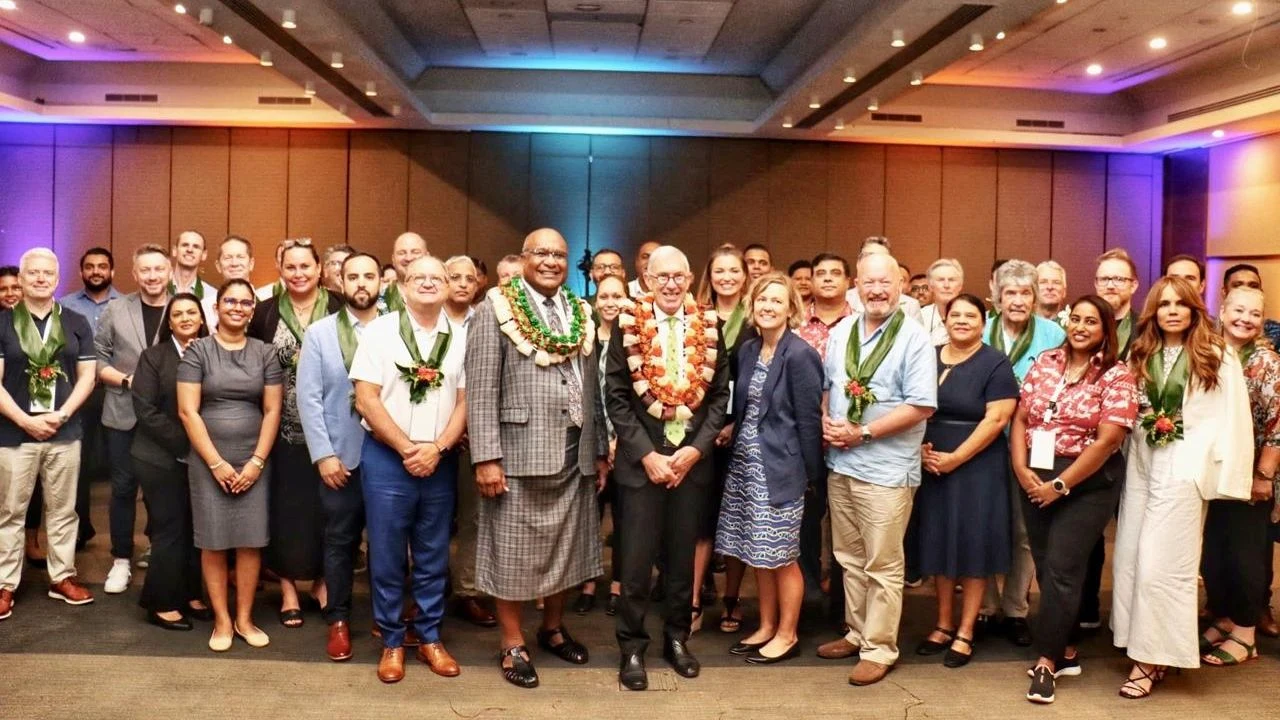
Last month I flew to Fiji for EXO Fiji, the first familiarisation event Outsource Fiji had ever run for the country’s outsourcing industry. From 18 to 21 June, a group of analysts, site selectors, journalists, and entrepreneurs were based at the Grand Pacific Hotel in Suva. We spent the week discussing the sector’s strengths and weaknesses, visiting local operations, and talking with the government leaders behind the push to grow it.
I came home with plenty of figures, but the stories I heard out there are what really stayed with me.
The warmth is real
Every outsourcing destination says its people put customers first. In Fiji I saw it for myself.
Life in Fiji grew out of village communities that go back hundreds of years. Family and community come first, and outsiders are welcomed in. In a customer service job, that comes through in every call. Plenty of countries promise a customer-centred culture. Fiji is one of the few places where I felt it.
The receptionist who won the contract
My favourite story of the week came from a visit to one of the local contact centres, and the general manager told it to me.
Lowes, the Australian menswear retailer, had always been staunchly Australian and had never outsourced anything. Over a few phone calls, people from Lowes kept speaking to the same receptionist at this contact centre. She wasn’t even on the main support team. By the end of those calls they were sure she was a genuinely warm and friendly person, and they wanted to meet her.
So they flew to Fiji to meet her, and they ended up doing business with the company. A brand that had never outsourced broke its own tradition because of one receptionist.
Hertz is another big name already working with BPOs in Fiji, for disaster recovery and for overflow across several functions. That’s where Fiji fits best for now, as a satellite team backing up a main operation somewhere else.
A Deputy Prime Minister who stayed
I’ve been on a lot of these trips, to a lot of countries, and government leaders usually follow the same pattern. They cancel, or they don’t turn up, or they arrive very late and send someone in their place.
Fiji broke that pattern. We spent a lot of time with Manoa Kamikamica, the Deputy Prime Minister, who was also the minister responsible for trade and communications. It might be the only time on any of these trips that I’ve spent real time with someone that senior in government.
He was there because the government believes in this industry and sees backing it as part of its job. After that week, I believed them.
People stay
Several operators gave me the same attrition figure, under 10% a year. In an industry where people often move on within months, that number stood out.
They gave me two reasons. The industry is young, so there are few rival employers to jump to. And the same community spirit that comes through on the phones also keeps people loyal to the team they join.
The hard parts
Nobody in Suva pretended Fiji has no weaknesses, and I respected that.
- Scale. The population is just under one million, and about 8,000 people work in BPO. Fiji can’t staff a huge operation quickly.
- Getting around. Outside Suva, the roads and transport need work, and so does the capital’s airport.
- Internet costs. Business-grade internet was running at about US$100 per Mbps. Everyone expected that to drop once Google’s new undersea fibre cables arrived.
Numbers I wrote down
- Corporate tax is 25%, or 20% if you move your headquarters to Fiji.
- Under the incentive schemes, tax losses can be carried forward for eight years.
- Setting up a business through Investment Fiji takes about six weeks.
- The minimum wage is FJD 4 (US$1.77) an hour, and BPOs tend to pay 10 to 15% above it.
- Fiji produces around 5,000 graduates a year, and about 30% of them leave the country.
What I took away
Fiji isn’t the answer for a company that needs thousands of seats by next quarter. If you need a backup site, an overflow team, or a small group whose job depends on how customers feel after the call, it makes a strong case. I left Suva convinced that the people are the reason to go.
Outsource Fiji shares more reports from the delegates on LinkedIn, if you want to go deeper.
Matt Kendall
Founder, Off Mute Media
Matt Kendall founded Off Mute Media after more than a decade in ghostwriting and B2B marketing, where he helped over 50 companies tell better stories. He built, scaled, and sold the newsletter BPO Bullhorn, rebuilt B2B news, research, and events platforms, and co-authors the Offshore CX Confidence Index. Today he designs and automates websites for small businesses.
More about Matt